Abstract
This article presents the design and implementation of Digital Korean Studies (DKS) in the Korean Studies department at the University of Vienna, illustrating how digital humanities methods are integrated with the usual curriculum that teaches Korean language, culture, and history to transform both teaching and scholarship. It traces the department’s evolution from a traditional Korean Studies program into a modern, scaffolded curriculum that now also includes transferable digital competencies through teaching Digital Humanities methods that are adapted to Korean Studies students’ interests. The BA curriculum has added Digital Korean Studies courses that introduce the basics of Digital Humanities approaches and methodologies and let’s students absorb this through various hands-on and project-based assignments. The MA curriculum introduces more advanced tools and theoretical grounding, especially in the realm of textual analytics and social network analysis.
-
Keywords: Digital Korean Studies, Digital Humanities, Curriculum Development, Textual Analytics, Social Network Analysis
1. INTRODUCTION
This article presents the design and implementation of Digital Korean Studies (DKS) in the Korean Studies department at the University of Vienna, illustrating how digital humanities methods are integrated with the usual curriculum that teaches Korean language, culture, and history to transform both teaching and scholarship. It traces the department’s evolution from a traditional Korean Studies program into a modern, scaffolded curriculum that now also includes transferable digital competencies through teaching Digital Humanities methods that are adapted to Korean Studies students’ interests. It goes into detail how the various Digital Korean Studies courses in the new curricula are taught, and will shows how the BA curriculum focuses on introducing a solid basic understanding of the various Digital Humanities approaches and methodologies and let students absorb this through various hands-on and project-based assignments, while in the MA curriculum, the Digital Korean Studies courses on offer introduce more advanced tools and theoretical grounding, especially in the realm of textual analytics and social network analysis.
2. KOREAN STUDIES IN VIENNA
Korean Studies in Vienna has a comparatively long and distinguished history. Regular courses in the Korean language, alongside lectures on Korean culture and society, have been offered since 1964. Just a year later, in 1965, Korean Studies was formally institutionalized as a section within the newly founded Department of Japanese Studies. At that time, courses were taught predominantly by Sang-Kyong Lee, who later earned his PhD and, in 1988, became a professor in the Department of Comparative Literature at the University of Vienna. By the late 1990s, even though Korean Studies was still only a section under the aegis of the department of Japanese Studies, the range and depth of its courses and seminars were comparable to those of fully established Korean Studies departments in Germany.
A new chapter began in 2000 with the creation of the Institute of East Asian Studies at the University of Vienna. Within this new structure, Korean Studies was recognized as an equal partner alongside the former Departments of Chinese and Japanese Studies. The appointment of Rainer Dormels in 2003 as Vienna’s first professor of Korean Studies further strengthened the field, and his position was confirmed as a full professorship in April 2005. Forty years after the first Korean language courses were introduced, students could finally major in Korean Studies at the University of Vienna. This consolidation culminated in 2008 with the approval of an official curriculum, which secured the field’s status as a fully established and independent section within the Institute of East Asian Studies and laid the groundwork for continued growth.
Around 2010, broader cultural shifts began to reshape the landscape of Korean Studies across Europe. The rising popularity of K‑Pop started to influence youth culture, and with support from the Academy of Korean Studies (AKS), many European programs reassessed their priorities, outreach, and engagement strategies. Until then, the number of students pursuing Korean Studies had been relatively modest. However, the global success of Psy’s “Gangnam Style” in 2012 sparked an unprecedented surge of interest in Korean culture and language among teenagers. Within a few years, Korean pop music, cinema, and television dramas had become embedded in youth culture throughout Europe. Young people who had once defined themselves through other musical scenes increasingly found a new sense of identity and community in the emerging K‑Pop genre. Austrian youth made this discovery as well, turning their enthusiasm into language study, academic curiosity, and a desire to learn more about Korea in all its facets.
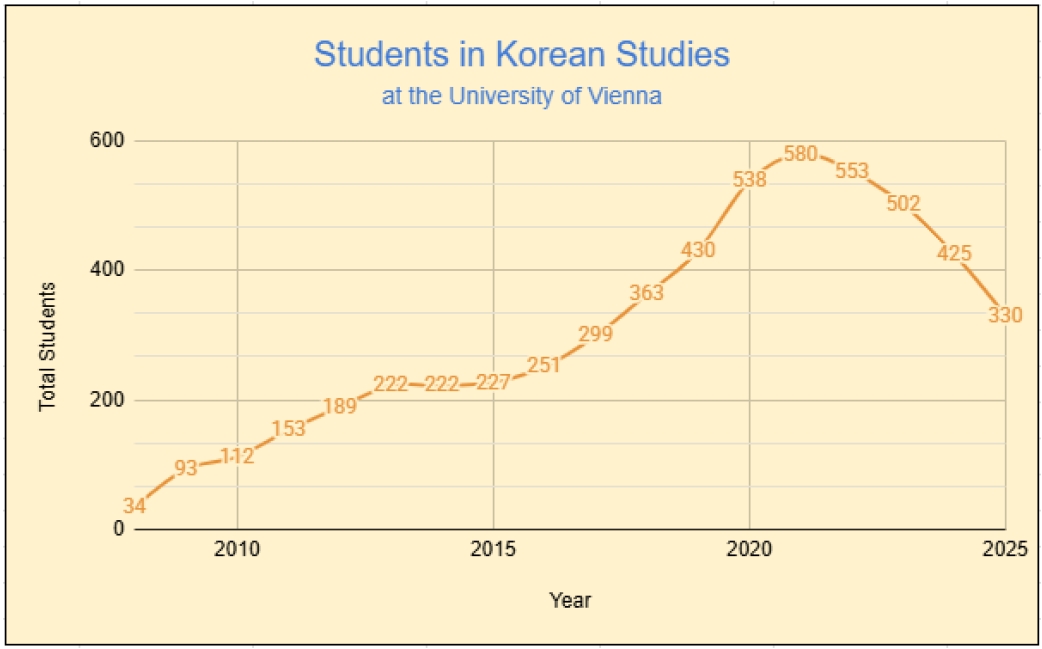
This cultural momentum is clearly reflected in enrollment trends over the past 17 years as can be seen in
Figure 1. When the Korean Studies curriculum was introduced in 2008, the program counted 34 students. By 2021, that number had grown to 580, illustrating both the sustained demand for Korean language instruction and the broader appeal of Korea-related subjects. The COVID‑19 pandemic led to a subsequent decline in enrollments, as it did across higher education. Furthermore, beginning in 2024, the University of Vienna introduced a numerus fixus that caps new BA admissions in Korean Studies at 54 students per year. This measure is intended to ensure smaller cohorts, closer mentoring, and higher-quality teaching. As a result, overall student numbers will naturally decrease in the coming years, even if the popularity of Korea—and the appeal of Korean Studies in Austria—remains strong.
3. ADDING DIGITAL KOREAN STUDIES TO THE BA AND MA CURRICULA
While enrollment in the Bachelor’s program has grown tremendously, the number of active students in the Master’s program has lagged behind expectations. This pattern is not unique to Vienna; across Europe, many Korean Studies MA programs face similar challenges, and the University of Vienna has been no exception. A notable share of our BA graduates either pursue Master’s degrees in other disciplines or choose to complete their graduate studies at universities in Korea. Students often explain this decision by saying that the MA curriculum in Korean Studies does not seem to add sufficient value beyond the BA, as many courses appear to be straightforward continuations of topics already covered at the undergraduate level rather than distinct, advanced offerings with new competencies.
This points to a broader structural issue in how many Korean Studies MA curricula in Europe are designed. When one surveys programs across the continent, the critique frequently proves valid: curricula tend to deepen historical, sociological, and linguistic knowledge in line with faculty specializations, but they do not always equip students with clearly differentiated, advanced methodological tools that feel both new and relevant. Courses on research methods and disciplinary theory—whether in history, literature, or sociology—often fail to resonate with students and are taught mostly in a superficial manner. As a result, even strong MA candidates can struggle when it comes to writing their theses, in part because they lack systematic training in the specific methodologies best suited to their research questions.
The retirement of Professor Rainer Dormels in 2022 and the appointment of Jerome de Wit as full professor and head of department in 2023 provided an opportunity to address these issues comprehensively. This change in personnel gave a unique chance to redesign both the BA and MA curricula in ways that would make the programs more coherent, more distinctive, and more attractive. A central goal was to create a Master’s program that stands out in the European landscape—one that offers clear added value beyond the BA and provides a competitive edge on the job market. Integrating Digital Korean Studies as a foundational component of the new curricula emerged as an obvious choice, aligning with international developments in the humanities and responding directly to student needs and interests.
Several guiding principles informed this reform. First, we sought to design undergraduate and graduate programs that do not solely mirror the department’s existing areas of expertise but also create meaningful space for students to pursue their individual research interests. By teaching digital skills, introducing Digital Humanities approaches, and familiarizing students with relevant tools, platforms, and data sources, we enable them to build their own digitally oriented projects using Korean-language materials. Students learn how to collect, structure, and analyze data in ways that help them formulate and answer specific research questions that genuinely matter to them.
Second, we aimed to prepare students more effectively for the job market they will encounter after graduation, both in competition with peers from other European programs and in broader international contexts. The competencies developed through Digital Korean Studies not only enhance students’ profiles by showcasing concrete, demonstrable skills; they also open doors in sectors well beyond academia and Korean-focused roles. The ability to manage large datasets, apply computational methods thoughtfully, and derive meaningful insights from complex cultural materials from a humanities-oriented perspective is increasingly valuable across industries—from the cultural sector and media to business, policy, and beyond. In this sense, Digital Humanities methods add both intellectual depth and practical versatility to a Korean Studies education.
The updated BA and MA curricula came into effect on October 1, 2024. They adopt a modern, scaffolded approach: at the undergraduate level, students are introduced to Digital Korean Studies through project-based learning that integrates language, culture, and data-driven inquiry. At the Master’s level, these foundations are systematically strengthened, allowing students to develop advanced methodological sophistication and produce research that is both academically rigorous and publicly impactful. Early feedback has been very positive. Students consistently highlight the value of acquiring transferable digital competencies while pursuing topics in Korean Studies that genuinely interest them. In short, the new programs not only deepen subject expertise but also empower students to define and execute their own research agendas—an approach that addresses prior shortcomings and positions our graduates for success in a rapidly evolving academic and professional landscape.
4. DIGITAL KOREAN STUDIES COURSES AT THE UNIVERSITY OF VIENNA
For the design of the courses and ideas for teaching examples that could introduce digital humanities, and its methods and tools adequately, we could not do without the helpful digital humanities focused books that have helped to encapsulate the possibilities when setting up a digital humanities’ focused course. From considerations when conceptualizing the syllabus and the course (
Battershill and Ross 2017;
Gardiner and Musto 2015), to writings on how to understand and teach the different approaches and ways of thinking about Digital Humanities (
Drucker 2021), and even writings about the uses of digital humanities in the field of Korean Studies (
Cha 2018). There are also more hands-on tutorials that can serve as a guide as to how to teach the students how to understand data (
Drucker 2021), databases (
Ramsay 2015), or guides that gave inspiration in how to pursue basic network analysis (
Kokensparger 2018), mapping and GIS-related teaching, or textual analysis (
Turkel, Crymble and MacEachern 2009).
2 For each of the courses, we have created new datasets and rewritten many of the tutorials so that they will be of interest and relevant to those working in the field of Korean Studies.
This course introduces students to the fundamentals of Digital Korean Studies research. It introduces the discipline of digital humanities and its use(fulness) in Korean Studies. It introduces specific digital humanities tools and how these can be used along with Korean data(bases). The course is graded through a written multiple-choice exam and four homework assignments. The course is taught for a total of 3 ECTS (European Credit Transfer and Accumulation System) credit points which represent roughly 75 to 90 hours of total student work and is taught as a Lecture with integrated practical exercises: The instructor conveys the theoretical material and methods of a subject area, after which the knowledge acquired is then applied and deepened—either immediately afterwards or in alternating sessions—through concrete examples, assignments, or projects.
3
Digital Korean Studies is framed as an integration of computing with the humanities, emphasizing how digital methods can be used to study Korean history, culture, and contemporary media while guiding how digital humanities projects should be conceived, evaluated, and communicated. The course presents concrete project ideas that foreground data collection, data source evaluation, and design decisions, including a virtual geographic mapping of K-Pop stars’ backgrounds to investigate what the distribution might reveal about the industry, and a critical examination of K-Pop idol databases for data quality and research usefulness. It also invites scrutiny of Korean artifacts in Austria, such as those in the Weltmuseum Vienna, to consider how artifact types, catalog records, field notes, and related documentation may reflect colonial perspectives and the sufficiency of data for scholarly work.
A core component of the course is teaching students text analytical methods and its applications. To allow an easy introduction into this topic, Voyant Tools is highlighted as a good introductory tool that can help in the visualization, information retrieval, sensemaking, and natural language processing of texts. To compare it with traditional approaches to working with text, explanations about the uses and limits of both distant and close reading are taught, for example by explaining that text analytics can automate classification of texts by sentiment, topic, and intent, illustrating the transformative potential of computational methods for literary and media studies.
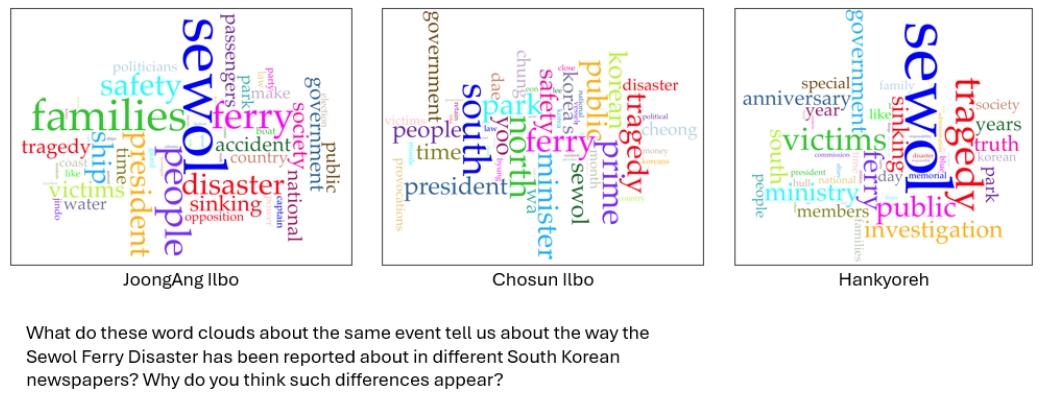
To illustrate this, students work with Voyant Tools with a corpus of English language essays written in various Korean newspapers about the Sewol Ferry Tragedy to visualize whether a certain political bias can be ascertained just by looking at the Word Clouds that are generated. A result of this effort is shown in
Figure 2.
Visualization and spatial humanities are also taught as a key methodological feature in Digital Humanities. Students learn how space and place can be active components of historical inquiry, and explore how borders, geography, and infrastructure enable spatial and temporal analysis within Korean Studies. Practical mapping exercises invite students to consider topics such as dwellings, phantom borders, and mini-mapping projects using beginner-friendly Digital Humanities tools like StoryMaps and Omeka with NeatLine.
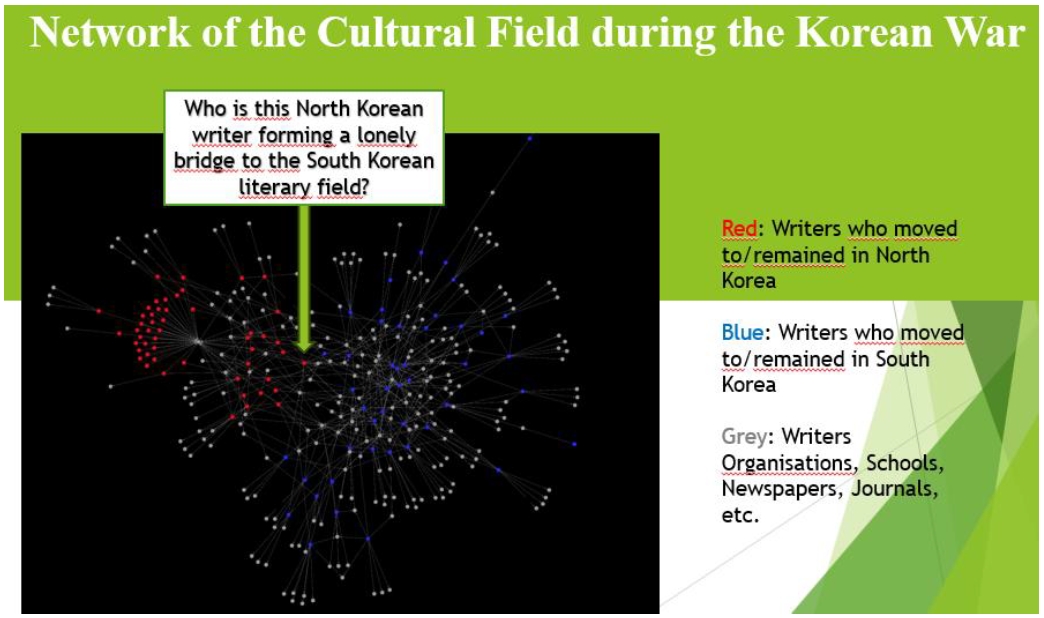
Students also get an introduction into network analysis, through a dedicated introduction on how to understand networks, by emphasizing nodes and edges as foundational elements and the concept of social objects as shared focal points around which networks form. A Korean War-era network example as shown in
Figure 3 demonstrates how actors—such as writers—are positioned within geographic and organizational categories, and how visual encoding of categories aids interpretation. Students are guided through exercises that prompt planning nodes and edges, evaluating data manipulation and integration with other techniques such as spatial analysis or text mining, and using Palladio to create simple networks, followed by centrality analyses to identify influential actors. The material also discusses the broader ecosystem of digital Korean studies, including government-driven digitization initiatives (such as the Smart Seoul Map
4), the tension between computational methods and humanistic judgment, and three guiding rules for doing digital humanities: articulate meaningful research questions, treat methods as tools rather than conclusions, and promote open access for ongoing scholarly debate.
Data visualization in this course is treated as a disciplined practice where design choices affect interpretation. The materials cover core components such as axes, scales, order, coordinates, and graphic variables (color, size, shape, orientation, position, texture), and emphasize careful consideration of labeling, proximity, and sequence to reduce cognitive load. They warn against misusing graphical elements, such as expanding a circle’s radius to imply larger values, and stress the importance of consistent labeling and context for trustworthy representations. A repertoire of design considerations is provided, along with references to visualization galleries and case studies to support practical learning and critical analysis of real datasets.
The homework assignments serve to grade the students and test their understanding of the key concepts of Digital Humanities inquiry and methods. The first assignment treats architecture as a form of rhetoric, arguing that cities and their built environments reveal who we are, shape our identities, and encode power through spatial practices such as street grids and planned districts; it emphasizes how these physical arrangements guide behavior and communicate social norms. Students are asked to choose a place of their choice in Korea and write a short report on how this place could function in communicating certain spatial practices.
The second assignment moves to a practical data-analysis task using Voyant Tools to examine a Korean-language dataset. Students are instructed to download the Han Kang dataset, apply Korean stopwords to filter noise, and then use Voyant Tools to uncover which words occur most frequently and what these patterns might reveal about how Han Kang’s Nobel Prize win was celebrated in Korea, while also considering the challenges of analyzing Korean text with such tools.
The third assignment shifts to network analysis in Korean studies, guiding students to construct a basic node-and-edges file by exploring connections around a chosen historical figure through Wikipedia and related pages, expanding to multiple levels of connected individuals to build a dataset of roughly 50 nodes and edges; the task culminates in visualizing the network with Palladio and interpreting the roles of key figures and the presence of clusters or surprises in the network.
The last assignment focuses on data-visualization integrity, asking students to critique several examples of flawed visualizations and describe the specific problems in each case—such as pie charts or map representations that mislead or obscure the data—so as to understand how design choices can alter interpretation and accuracy.
4.2 Advanced Course on Digital Korean Studies (Bachelor Course)
The advanced course on Digital Korean Studies builds further on the fundamentals learnt in the previous semester. It introduces further theories and tools that shape the discipline of digital humanities and its use in Korean Studies. The course delves more deeply in how the most commonly pursued digital humanities methods: textual analysis, network analysis, and spatial analysis projects are pursued. In the second half of the semester students apply this knowledge in the creation of a small Digital Korean Studies project of their own choosing. The course is graded through a multiple choice exam, a 1-page research plan outlining the mini-project that will be pursued, and a 1000-word analytical report where students are requested to report how they pursued their project in detail, outlining the things that went well and were difficult while working on their project in particular.
The course on textual analysis emphasizes how Digital Humanities tools can help in approaching the analysis of texts as a flexible, exploratory process where data analysts venture into the text without a predetermined path, allowing categories and patterns to emerge from the data itself and aligning naturally with machine learning and AI methodologies. It contrasts this bottom-up, data-driven inquiry with the more traditional humanities-focused top-down, hypothesis-driven approach, describing how the latter begins with a specific research question and predefined topics to focus the investigation, thereby prioritizing clarity and efficiency in identifying relevant patterns. A central distinction is drawn between close reading and distant reading, illustrating how traditional, detailed engagement with a limited set of texts can be complemented by computational approaches that enable the analysis of large corpora to reveal broader patterns such as word frequency, themes, or sentiment across many documents.
More specific digital humanities tools and analytic methods are introduced to the students at this stage, ranging from word clouds, collocations and concordances, topic modeling, named entity recognition and sentiment analysis. Several software tools that can be used to pursue such inquiries are introduced here such as Mallet, AntConc, WordSeer, and Orange Data Mining to show how each enable various analytical tasks and visualizations.
The understanding of network analysis is further advanced in this course by introducing various concepts and analytic tools that are used within this field. It highlights how a network visualization can make abstract relationships more tangible and how through visual cues, researchers can identify central actors—those with high degree, gatekeeping roles, or strong connective capacity—one can facilitate quicker recognition of influence and power within the network. Students learn how such visuals also help in detecting subgroups or communities that share interests or frequent interactions—crucial for coalition management and strategic planning—as different clusters may have distinct needs or levels of engagement. Additionally, visualizations highlight outliers and peripheral nodes, pointing to opportunities for deeper engagement or potential risks to network cohesion. Beyond static structure, this class also emphasizes the value of tracing network dynamics over time. Visual tools can illustrate how ties form or dissolve, how nodes enter or exit, and how centrality measures shift as events unfold or interventions are implemented, thereby offering insights into the evolution of a network’s influence and cohesion.
Technical concepts such as the different types of networks and their representations (directed, undirected, and weighted networks), and network typologies and the meanings behind concepts such as density, diameter, and centrality, as well as the metrics of degree and betweenness centralization and how they differ are explained, so that students start to see what each measure conveys about a network’s structure and information flow, underscoring how central actors and pathways influence connectivity and reach.
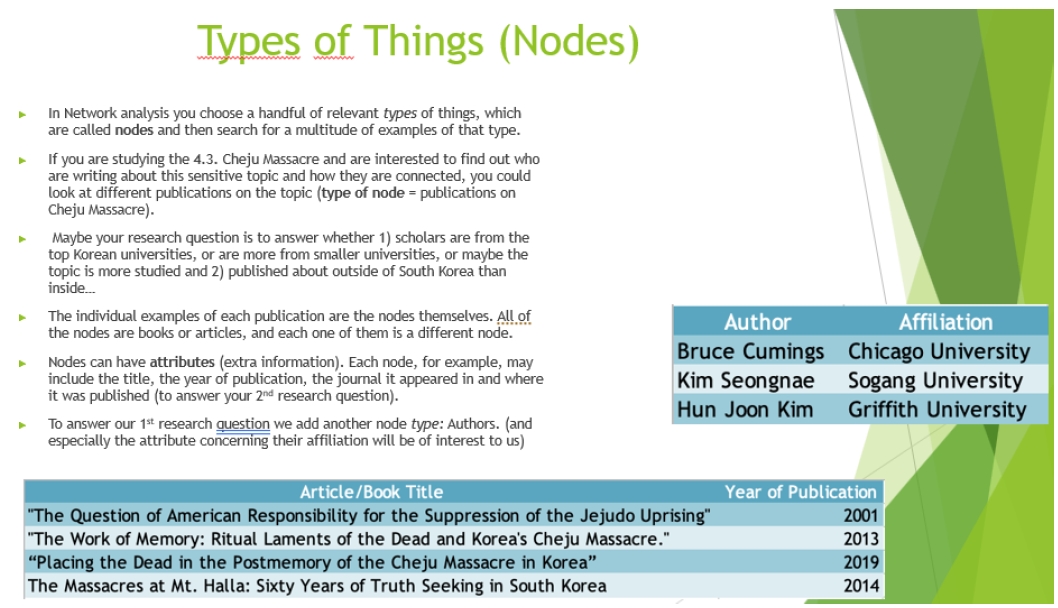
As a practical Korean Studies example, the sensitive topic of research on the Cheju Massacre is chosen, to illustrate how publications and authors can be mapped and analyzed to reveal patterns of discussion, collaboration, and dissemination. This example (see
Figure 4) underscores the utility of node-type differentiation (e.g., authors vs. publications) and the role of edges in tracing scholarly networks around controversial historical events, demonstrating how network analysis can illuminate the structure of discourse and scholarly communities surrounding a topic.
The third main emphasis on the course is on how GIS and mapping are used in the digital humanities, highlighting both practical tools and conceptual approaches for visualizing spatial data. It deepens the students’ understanding of the concept of spatial humanities to recognize the social constructions of place and reevaluating power structures embedded in cartography to rethink how time and place are presented in humanist scholarship. In this vein, students are introduced to Critical Cartography where maps are questioned about their perceived neutral representations, asserting that maps are socially constructed instruments shaped by power, ideology, and culture; key ideas that are taught include maps as arguments, the politics of mapping, silences in what is left out, and counter-mapping to represent marginalized perspectives.
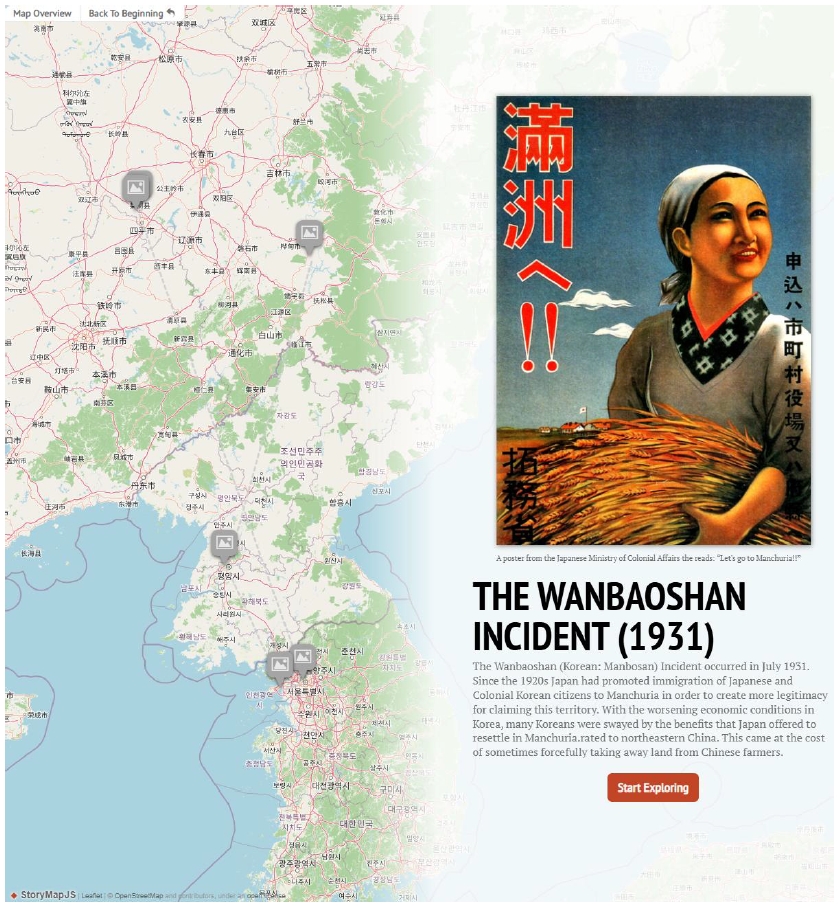
This class emphasizes viewing places as settings for human activity and uses computational tools to explore these relationships, while also addressing how maps can reflect and challenge prevailing ideologies. It provides an overview of how traditional mapping tools such as Google Earth, OpenStreetMap, or QGIS can be used to pursue such projects, but also how story mapping tools may often be a better choice in communicating spatial narratives, with examples from ARCGIS StoryMaps, StoryMapJS, Neatline, and Historypin, which all facilitate the integration of media and interactive elements to convey humanities research for diverse audiences. An example that explains the uses of StoryMapsJS to tell humanities related histories in different ways, in this case to tell the story of the Wanbaoshan Incident, is shown in
Figure 5.
As has been mentioned, the second half of the course is focused on students creating mini Digital Korean Studies projects. Since the students can choose their mini-projects topics for themselves, there is a wide variety of topics that have been studied. What follows is just a small selection of issues that are put under the Digital Korean Studies lens by our students. The mapping of Korean Cultural Centers across the world and their activities to see how they differ regionally and whether a specific strategy is used by these centers in promoting Korea; Mapping Immigration Changes in South Korea to see how immigrants’ lives are shaped by the spaces they inhabit in South Korea; Korean Music Industry Networks to analyze the multitude of collaborations between K-Pop stars from different musical genres and from different agencies; a network analysis on the interconnectivity of directors, screenwriters, and actors of K-Dramas from the three major broadcasting systems (KBS, SBS, MBC); The representation of LGBTQ+ in Korean Visual Media and what is done about their stigmatization and discrimination; Anti-feminist rhetorics and their spread through media surrounding the publication of Cho Nam-Joo’s novel Kim Ji-Young, Born 1982; or a textual analysis of travel vlogs of foreigners visiting North Korean and how they present North Korea.
4.3 Digital Korean Studies 1: Textual Analysis (Masters Course)
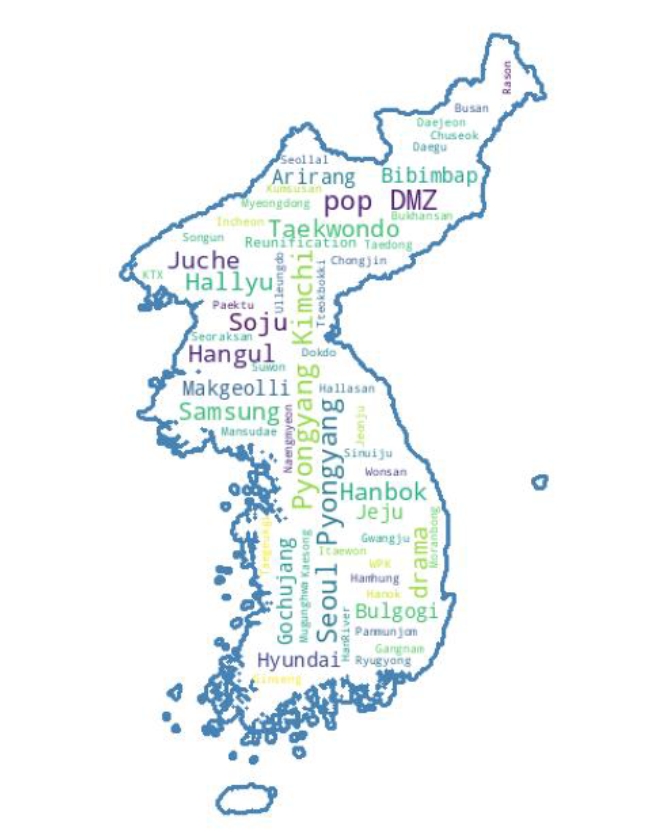
In this course students engage in more detail with the theoretical and methodological aspects of textual analysis and how this can be applied in Korean Studies-related research topics. It introduces students to basic programming methods in Python and gets them acquainted with the tools and programming methods that are used in textual analysis to work on a self-chosen text analytic related Korean Studies project. Since this course relies heavily on showing specific programming methods that are current in Textual Analysis, there will first be an introduction to the basics of programming in Python for those who have no prior knowledge in programming. This is then followed by teaching programming methods and tools that help in preparing the text corpus for analysis by focusing on web scraping and data cleaning, as well as the advancements in Optical Character Recognition to ready textual data for analysis for both English and Korean texts. The remaining weeks then cover the core analytical phases, beginning with preprocessing, frequency analysis, and word clouds (see
Figure 6) in Week 7, then moving to Collocations and Concordance in Week 8, and Topic Modeling with a predominant focus on the usefulness of TF/IDF in Week 9.
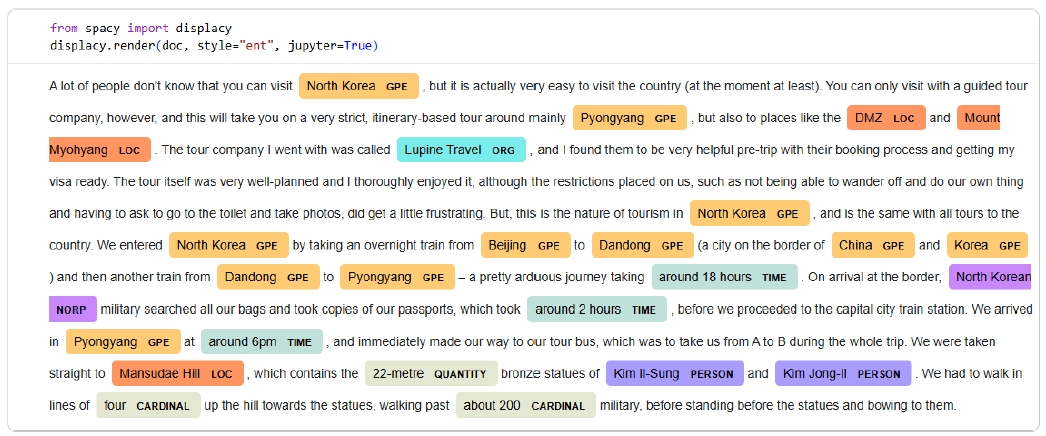
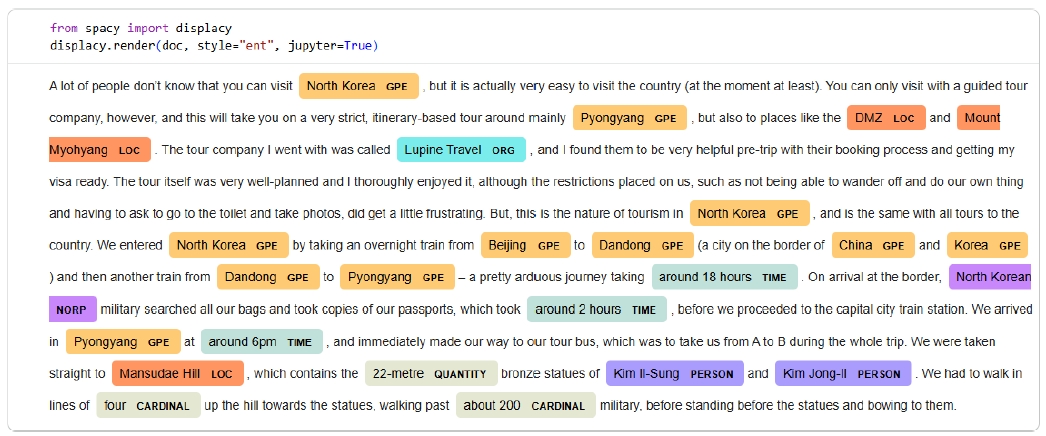
In Week 10 the course introduces Named Entity Recognition of English (see
Figure 7) and Korean texts as part of the text analysis toolkit, while Week 11 centers on Sentiment Analysis, expanding students’ ability to derive interpretive signals from textual data.
Since the course introduces easy programming tutorials of each textual network analysis method, the course makes ample use of Jupyter Notebooks to explain the methods and show examples since then there is no requirement for installation of Python libraries across a variety of versions and systems. The creation of a textbook for this course is now in progress and will be completed in 2027 after which it will be freely available as an open access publication.
4.4 Digital Korean Studies 2: Network Analysis (Masters Course)
In this course students engage with the theoretical and methodological aspects of social network analysis (SNA) and how this can be applied in Korean Studies-related research topics. It introduces students to the tools and programming methods that are used in SNA and work on a SNA-related Korean Studies project. Students learn what theoretical texts are useful to grasp and gain a deeper understanding of Social Network Analysis, which digital tools and programming skills are needed to pursue a SNA-related project and how to create a Social Network Analytic project that is interesting and relevant in Korean Studies research. In the first week, students are re-introduced to the scope of network and mapping analysis and begin shaping a research question that they will pursue answering through a network analysis until the end of the course. The early emphasis here is on asking good questions—what relationships matter, how they might be represented, and which sources can support them—so that methods serve clearly defined research aims rather than the other way around.
By the second week, the curriculum turns to the basic principles of network and mapping analysis. Here, students relearn the conceptual grammar of nodes, edges, attributes, and the variety of ways ties can encode interaction, influence, or flow. They consider how choices about projection, scale, and normalization shape interpretability, and they confront the ethical and ontological assumptions embedded in data modeling. These foundations prepare them to read visualizations critically and to build them responsibly.
With the groundwork set, the class explores historical network analysis, which places relationships in time and context. Rather than freeze a system into a single snapshot, students learn to think diachronically, tracing how alliances form, dissolve, and reconfigure across periods. Case studies that have a relation to Korean Studies illustrate the distinct challenges of historical data—ambiguity, gaps, uneven temporal resolution—and methods for reconciling those limits with the promise of relational insight.
Attention then shifts to ontological data networks, where the concern is not just who is connected to whom, but what kinds of things are connected and how categories, events, and entities cohere in a knowledge graph. Students examine how to model multi-typed relationships without flattening difference, and they practice translating conceptual schemas into data structures that preserve meaning while remaining computationally tractable.
The course next pivots into hands-on toolsets. One session introduces Cytoscape, with a focus on styles, layouts, and annotation functions. Students learn how aesthetic decisions communicate structure—how color, size, and position guide attention and encode variables—and how to annotate networks to tie visual patterns back to the underlying questions. A subsequent session centers on Gephi for mapping and timeline functions, extending the analytic lens from topological patterns to spatial and temporal dynamics. Here, the class experiments with layouts suited to different network types and explores how timelines can reveal punctuated change or gradual drift in relational systems.
The course then opens a programming pathway with an introduction to Python for social network analysis. Students take their first steps with libraries that compute centrality, detect communities, and manipulate graphs at scale, gaining a sense of where code affords flexibility beyond point-and-click interfaces. Here they learn how to explore social networking data sets with Python, working through the practicalities of acquisition, cleaning, and transformation. They grapple with messy realities—APIs, rate limits, missing values—and learn to document workflows that keep analyses reproducible.
The journey culminates with network and mapping visualization, where method, tool, and narrative converge. Students refine their visual outputs for clarity and argumentative force, aligning design choices with the story the data can responsibly tell. By the end, they have moved from questions to models, from models to analyses, and from analyses to compelling visual narratives—equipped not only to build networks and maps, but to interpret and communicate them with rigor and care.
5. CONCLUSION
What has been shown above must be understood as a snapshot in time of how our Digital Korean Studies courses are taught at this moment. With advances in (pedagogical) understanding of how to teach digital humanities to Korean Studies students, and with the speedy advancements that are currently made especially in South Korea in the development of tools for scholars to analyse and work with Korean data and texts, we continue to build and rebuild our courses to incorporate these changes. In this way, we aim to continue equipping our students with the skills necessary to further pursue their academic and non-academic interests in Korean Studies and that they can explore these confidently through various digital humanities approaches.
Notes
Figure 1Number of students majoring in Korean Studies at the University of Vienna
1
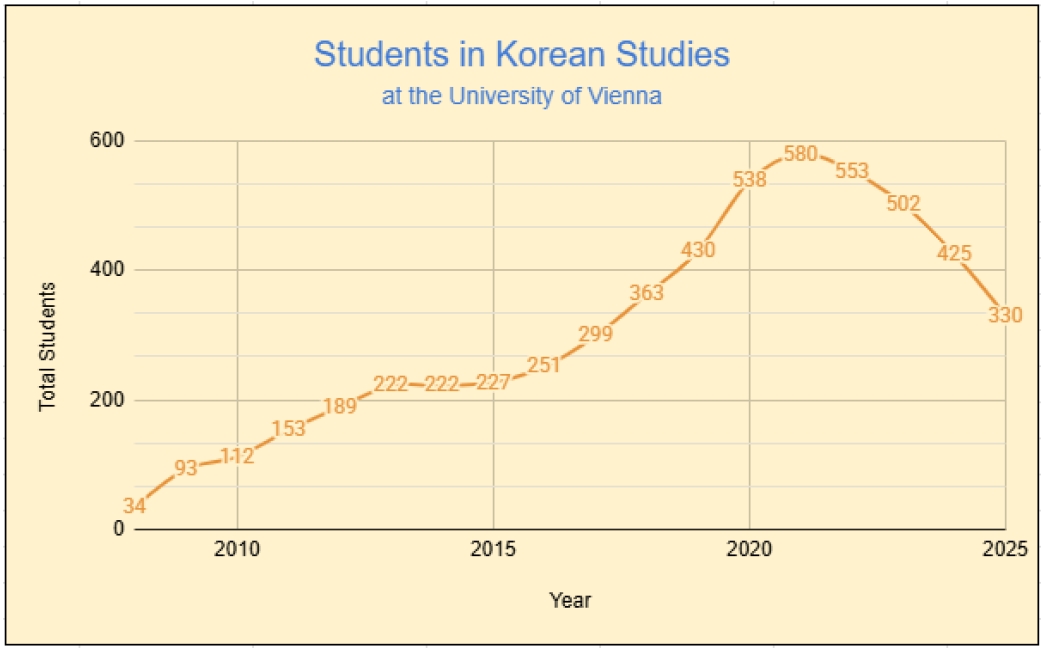
Figure 2Teaching the usefulness and flaws in using Word Clouds with the example of how the Sewol Ferry Tragedy has been debated in the English editions of various Korean newspapers
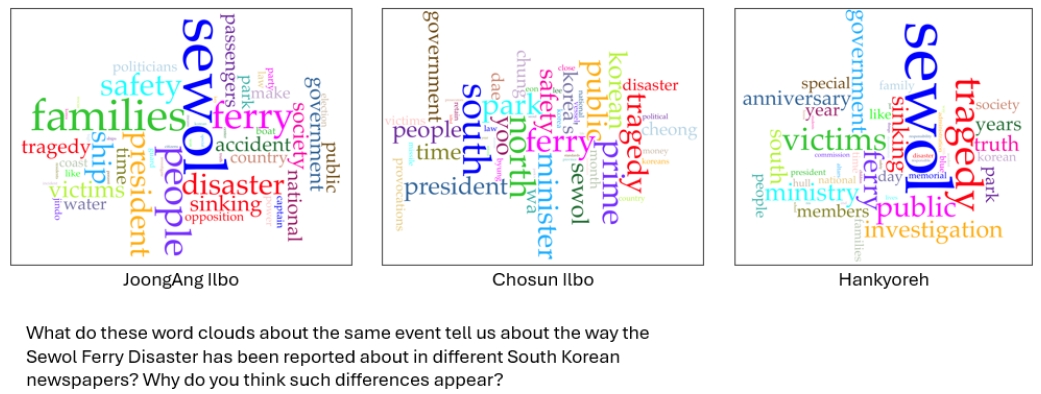
Figure 3Example of teaching Network Analysis with a Korean Studies focus
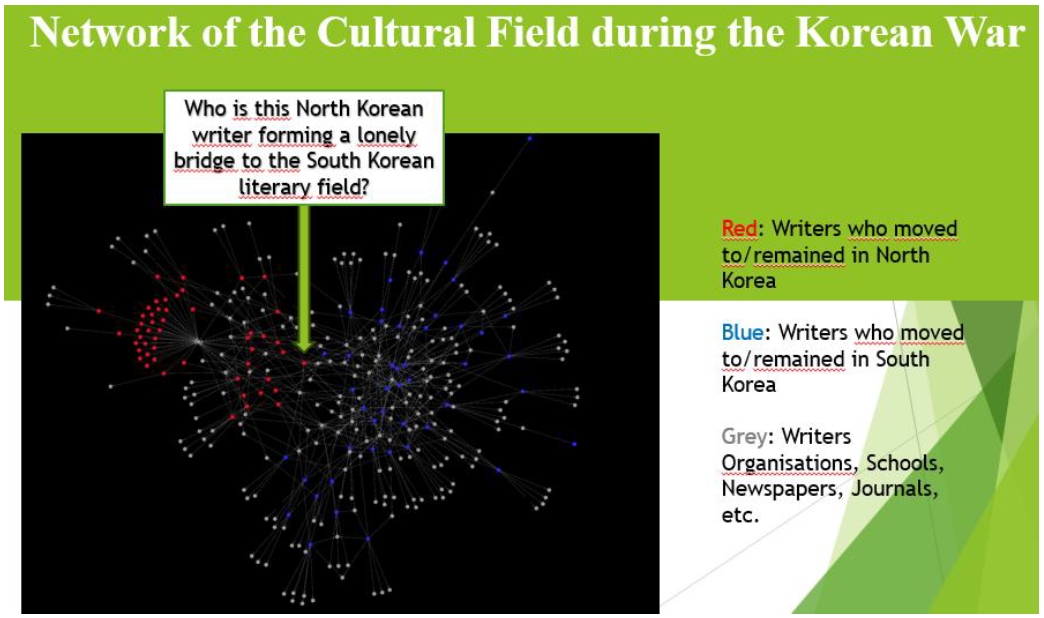
Figure 4Example slide explaining node creation and its importance when using Network Analysis to answer humanities-related questions
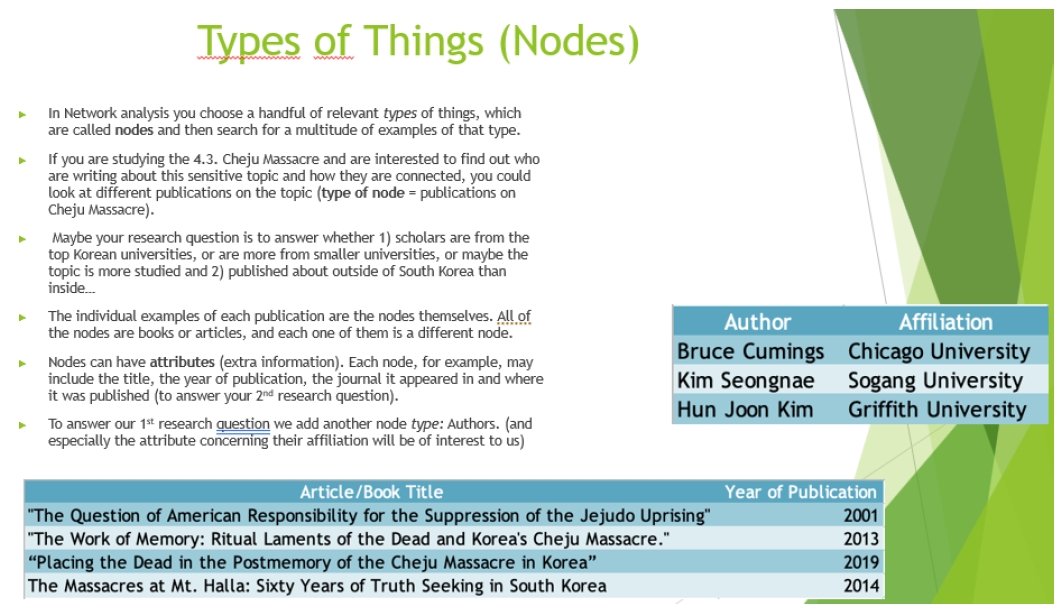
Figure 5Example to explain the uses of StoryMapsJS to tell humanities related histories in different ways
5
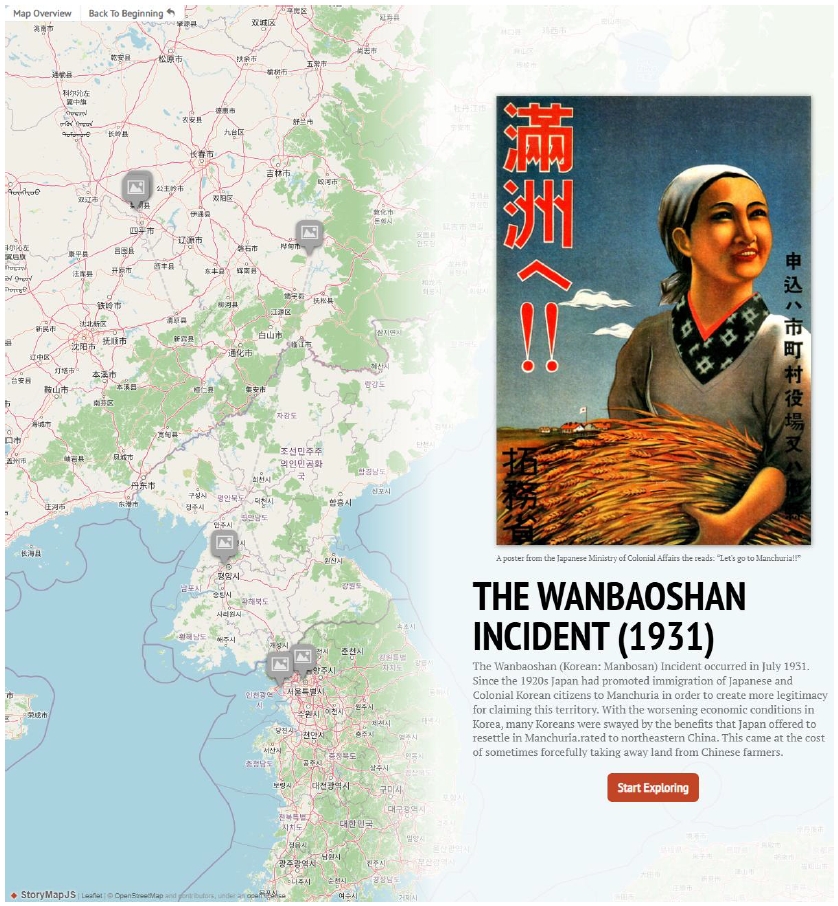
Figure 6An example of how students are introduced to creating nicer looking Word Clouds with available Python libraries
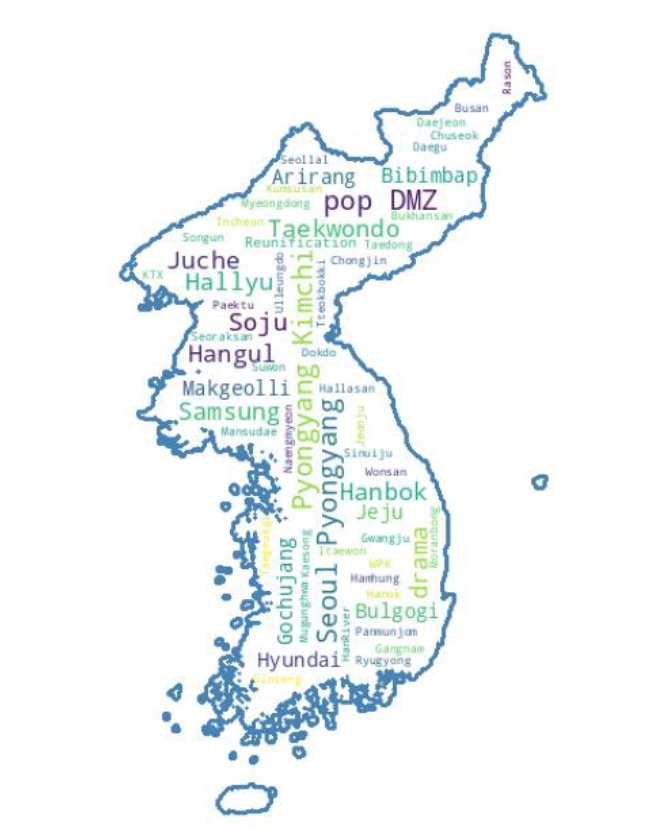
Figure 7Output of a Named Entity Recognition example in Jupyter Notebook using an
REFERENCES
- Battershill, Claire, and Shawna Ross. 2017. Using Digital Humanities in the Classroom: A Practical Introduction for Teachers, Lecturers, and Students. Bloomsbury.
- Javier, Cha. 2018. “Digital Korean Studies: recent advances and new frontiers”. Digital Library Perspectives 34 (3): 227-44. https://doi.org/10.1108/DLP-04-2018-0013
- Johanna, Drucker. 2021. The Digital Humanities Coursebook: An Introduction to Digital Methods for Research and Scholarship. Routledge.
- Gardiner, Eileen, and Ronaldo G. 2015. Digital Humanities: A Primer for Students and Scholars. Cambridge University Press.
- Brian, Kokensparger. 2018. Guide to Programming for the Digital Humanities: Lessons for Introductory Python. Springer.
- Ramsay, Stephen. 2015. “Databases.” in A Companion to Digital Humanities, edited by Susan Schreibman, Ray Siemens, John Unsworth, 177-97. Blackwell Publishing. Originally published 2004.
- William J., Turkel, Adam Crymble, and Alan MacEachern. 2009. The Programming Historian. NiCHE: Network in Canadian History and Environment.